When people think of freedom, they usually imagine happiness. I don’t.
When I first left home, I was immature, scared, isolated, broke, emotionally damaged, and completely unprepared for life. I had almost zero confidence in myself after years of being made to feel small, wrong, difficult, “bad,” or simply not enough. I was eighteen, going on nineteen years old, and although I told everyone I was moving to Montréal for university, for McGill, for pre-med, for a better future, the truth is much simpler than that:
I just wanted to leave.
At that time, I don’t think I fully understood that yet. But what I do know is that for as long as I can remember, I always wanted to grow up, turn eighteen, and leave that painful environment behind.
Montréal felt beautiful to me from the very first time I saw it as a teenager. The old buildings, the way people dressed, the cafés, the food, the feeling that life was happening outside. It felt different from everything I knew in Ottawa. Maybe at that age I thought I knew exactly what I wanted to become, but looking back now, I think the only thing I truly knew was that I wanted to grow up somewhere far away from the chaos I grew up with.
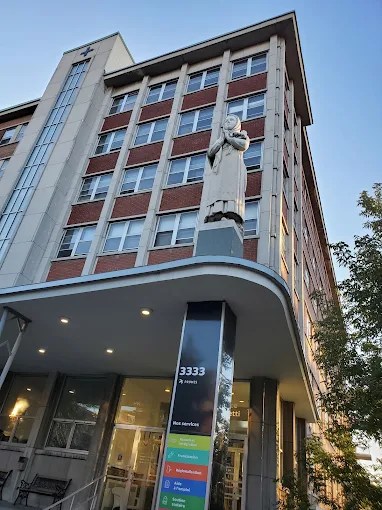
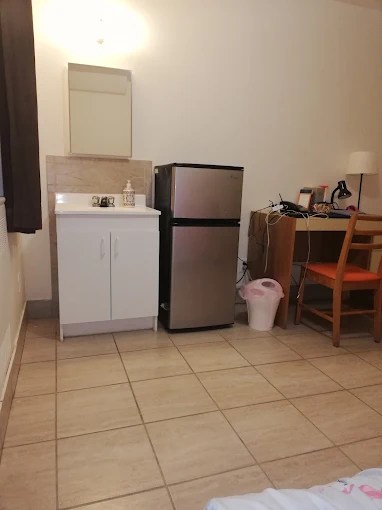
My parents could not afford the McGill dorms, so instead, we found the cheapest room possible in a church-related women-only residence catered mostly to immigrant women. The rooms were extremely cheap… if I remember correctly, the smaller rooms were around $150 a month, and the bigger ones maybe around $175. Definitely less than $200. Looking back now, that alone says a lot about the kind of place it was.
We shared bathrooms, and I remember dreading even taking a shower. The bathrooms were freezing, especially in winter, and the shower heads were installed so low that every time I washed my hair, I had to bend down awkwardly under the water. Even going to the bathroom in the middle of the night felt miserable because of how cold everything was. We were not allowed to have microwaves or cooking appliances in the rooms.
The residence itself was not really a student residence in the traditional sense. It was a women-only residence mostly for immigrant women, many of them refugees or women trying to rebuild their lives. Most of the women living there were not university students at all. The place was intended for temporary stays, usually from a few months up to about a year.
Every morning, I had to walk through the cold just to get to the bus stop. The bus was almost always completely packed, and I usually had to stand the entire ride while we sat through traffic on the way downtown. Once there, I had to get off the bus, switch to the metro, take the metro to McGill, and then walk uphill to campus.
The commute itself felt exhausting and overwhelming to me. And what stressed me even more was knowing that after all of that, I still had to make the entire trip back home again at the end of the day. I had literally no money, and one of my constant worries was being out somewhere during the day, getting hungry, and not being able to afford food. I used to make sure I brought something with me before leaving, because I was always scared of not having enough money once I was outside.
It was difficult. Especially for someone like me, who has always hated the cold.
I was isolated from university life and isolated n general in a place that was pretty far from everything, in a city I didn’t know. I started to feel lonely. Very lonely. Looking back now, I also think those years were the beginning of my isolation and the circumstances that eventually led me to stop going outside altogether. It was the beginning of a deep depression and isolation, of me spending days inside that room, barely leaving. Although the truth is, I don’t think the depression actually started there. Looking back now, I think it may have started when I was three years old, maybe even earlier.
I slowly stopped going to classes. I struggled in ways I did not yet understand. Years later, I would realize that ADHD had been quietly shaping much of my life underneath everything else.
And yet, despite all of that, I was still happy to finally be on my own. As difficult as those years were, that tiny room was the first place in my life that truly felt like mine. It was the beginning of my own life.
I distinctly remember something strange:
Peace.
Not happiness. Not confidence. Not success. Just peace.
For the first time in my life, there was no more of my parents’ never ending fights in the background. No tension filling the walls. No more walking on eggshells in constant fear of someone’s anger, moods, disappointment, or criticism. Nobody’s emotions controlled the atmosphere around me anymore. I could sit in silence and simply exist.
After everything that happened afterward, after all the struggles and difficult years that followed, I still believe leaving home was the best decision I ever made.
Because there is no prison worse than a house without peace.